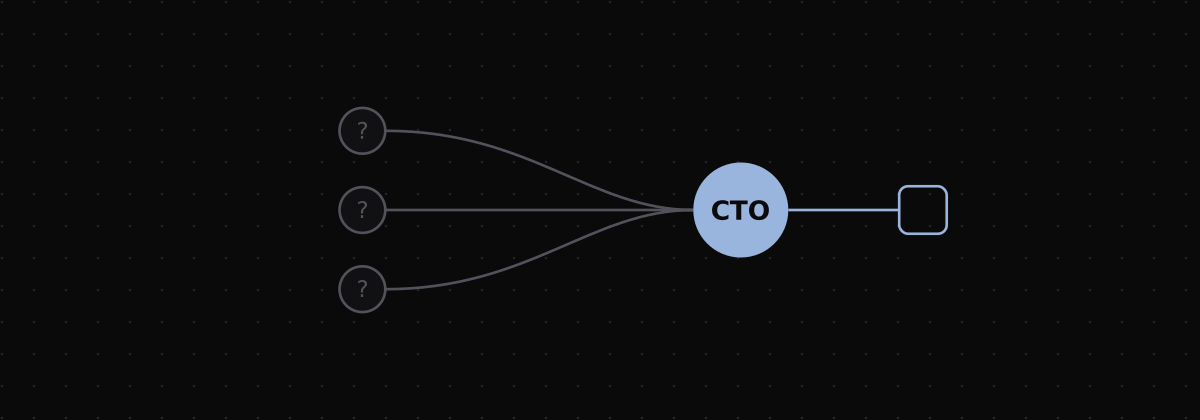
Many companies reach the question “do we need a CTO?” after a problem: a vendor that doesn’t deliver, a product that slows down, an investor asking who owns the technology. The right question, though, is another one: who takes responsibility for technical decisions today?
Three signs
- Technical decisions are made by the vendor, not the company.
- The team is good, but nobody sets priorities and architecture.
- An investor or client asks for guarantees nobody can give.
If you recognise at least two of these, the problem isn’t technical skill but direction. That’s exactly what a CTO — even a fractional one — brings.
The problem is almost never the technology. It’s who decides, and by which criteria.
When you don’t
If the product is stable, the team already has a recognised lead and the roadmap is clear, adding a CTO risks creating an extra layer. At most you need a periodic review.
Where to start
A two-page written diagnosis is worth more than six months of meetings: what works, what’s at risk, and the two or three moves that would change the most.